Thank you for choosing homestay as your accommodation option while you study in Canada.
As your homestay provider, we promise to provide:
A host family who has been carefully vetted including character reference and criminal record checks, and who will care for you and provide a safe environment.
A comfortable, healthy, and supportive home including furnished bedroom with bed, window, storage, and study space verified by our team during in-person site visits.
24/7/365 support during your entire stay.
Studying and living abroad is exciting, but it can also be overwhelming especially at the beginning. To prepare and make the most of your homestay experience, read this guide and our Student Participation Agreement (SPA) carefully, and lean on your CHN Relationship Manager (RM) as much as you need.
Your RM will help you navigate your experience in Canada, including helping you settle into your homestay, school and community, and brainstorming solutions to challenges that may arise.
Regular check-ins with your RM are important. Be sure to attend all meetings with your RM and respond when they reach out to you. If you have questions or challenges at any time during your stay, please phone, text, or email your RM right away.
How to contact CHN
To contact your RM, our Care and Support Team, or our Emergency Line, please call or email:
Homestay is safe and affordable, and living with a local family adds a valuable layer to your experience and education in Canada.
CHN’s expectations are clearly detailed in our Student Participation Agreement (SPA), which we ask you to read, sign, and discuss with your hosts. Our SPA is intended to provide clarity on what is expected of you and to help you make the most of your homestay experience.
Fees
To ensure your placement with a local homestay family, be sure to complete payment of all fees at least 10 weeks before arrival.
Orientation Sessions
CHN orientation sessions will prepare you for your homestay experience and, therefore, your attendance is very important. Sessions cover topics such as public transit, how to access health, financial and telecommunication services, and the CHN supports available to you.
Make sure to complete your school registration as this is what connects you to Canada. Check your emails often as requests for documents and confirmation on appointments are typically sent by email.
If you have questions about your school registration or processes, reach out to your RM. We are here to support you.
IMPORTANT (FOR MINOR STUDENTS):
Attendance at school is mandatory and it is expected that you remain in good standing with the school, i.e., attending all classes, participation in class, passing grades. If you are sick and can’t go to school, please update your host and your RM so we can notify the school.
Regular absence from school or poor performance can result in serious consequences. You could be expelled from school and may be required to return home.
Share progress report cards with your RM and host. They want to share in your successes and can help with challenges, if needed.
Get involved in school clubs and teams. This is an opportunity to add valuable layers to your education and build a healthy social circle.
5 Tips for Making the Most of your Homestay Experience
1
Rely On Your Homestay Family
Being away from home can be overwhelming especially when moving to another country.
Homestay families are a resource to help you navigate challenges before, during, and after your arrival. They can help you make the most of your time outside of school by pointing you to resources and options for socializing and entertainment.
Ask questions and share your interests . This will give your hosts a starting point to support you.
2
Exchange Culture
In homestay, you will learn what it is like to live in Canada and “be Canadian,” but your homestay family is excited to learn from you, too.
Bring things from home that you can share, like recipes, snacks, games, and traditions. Show your host family what it’s like back home, including celebrating holidays that are significant to you or your culture. Your host family will appreciate it!
Also, remember that it is not ok to discriminate based on race, religion, sexual orientation, age, family make up, or ethnic origin. Keep an open mind and always be respectful. Diversity is one of the things that makes Canada special.
3
Contribute to the Household
Homestay is not a hotel and there are no housekeeping services in homestay. You are expected to keep your living space clean and orderly, to volunteer to tidy shared spaces like the living room and kitchen, and to help make meals.
These small actions demonstrate your interest in integrating into your homestay family as well as in the health, happiness, and success of your homestay household.
4
Be Curious and Have Fun
Homestay is a wonderful opportunity to be part of the family you live with and part of the community you live in. When done right, homestay can be a valuable addition to your studies in Canada and a source of many fond memories.
Be proactive! Volunteer to tag along on shopping runs and errands, learn new skills by observing or participating in host-family work, hobbies and pass times, and ask to be introduced to people with common interests.
Seizing opportunities like these help you bond with your homestay family and make lifelong friendships and global connections.
5
Don’t be Afraid to Talk About Challenges
Small challenges can grow into big challenges without timely and clear communication. Don’t be afraid to talk about challenges.
Your CHN Relationship Manager can also help when you feel like you are not getting what you need from homestay. Outside of regular office hours, our Care & Support Team is available 24/7/365 to help resolve issues and get you the help you need.
If you are making your own arrangements for transportation to and from your homestay home, send your flight details to confirm your arrival and departure dates.
Let us know your transportation plans, including the timing of your drop-off and pick-up at the host family home so we can ensure your hosts are notified.
On Arrival
When you arrive at your homestay, ask your host family for a tour of the home. During your tour, try your best to do the following:
Collect a list of important numbers and the home address to always keep with you.
Ensure you have access to and/or understand how to use the following:
Bathroom – toilet, sink, shower
Appliances – microwave, dishwasher, clothes washing machine and dryer
Electronics – WiFi password, TV, phone
Safety – fire safety plan (suitable exits and emergency phone numbers), fire extinguishers (location and use)
Be sure to meet everyone who is living in the household.
Be respectful of everyone’s privacy and discuss the family routine/schedule.
Household Rules
If you are ever unsure of what your family’s household rules and expectations are, it is important to ask questions.
Every family has unique habits, preferences, and routines. It is important not to compare your host family with another family for this reason.
Household rules, which you must discuss and follow during your stay, could include:
When to have baths or showers – this is especially true in larger families where a bathroom schedule is needed to ensure everyone can get ready on time for their day
Where food is located and what can or cannot be eaten
When and how to do laundry
Curfew times
Limits on the use of electronics or the Internet in the home
Family schedules and bedtime hours
Limitation of scents, including some types of food and perfumes
Private areas of the home that your host may ask you not to enter
Your Bedroom
Your bedroom will include a window, bed and bedding, a dresser/closet, and study space. Remember to ask questions if anything is different from what you are used to or expected.
It is common for students to feel cold at first as we tend to set our thermostats a bit lower in Canada. Ask your host for more blankets and dress in layers to help while your body adjusts. Please do not adjust the temperature in the home without speaking to your host family first.
Hosts may enter a student’s room by asking permission or giving notice, such as knocking on the door and waiting for the student’s approval to enter. Students must allow hosts into the room in a timely manner.
CHN encourages hosts to check student rooms on a regular basis to ensure a hygienic environment is being maintained and to check for damages. Hosts are not allowed to enter a student’s room without permission from the student.
The Bathroom
Ask your host to explain their expectations around the use of the bathroom. Most often, you will be sharing the bathroom with family members and/or another student, and there may be a schedule around bathroom use, especially when there are multiple people in the home using the same bathroom.
Make sure you are aware of your bathroom times, and follow expectations around the length of time allotted to ensure everyone has a chance to get ready.
Each Canadian home has its own hot water tank with a limited supply of hot water, so it is important that everyone does their part in limiting their use of hot water. Also, toilet paper is designed to be flushed after every use and NOT disposed of in the garbage. Feminine products like tampons and pads must be disposed of in the garbage. In Canada, there are specific products that can and cannot be flushed. Flushing products other than toilet paper can lead to the toilet becoming non-functional and may cause damage to the plumbing, resulting in costly repairs.
Food and the Kitchen
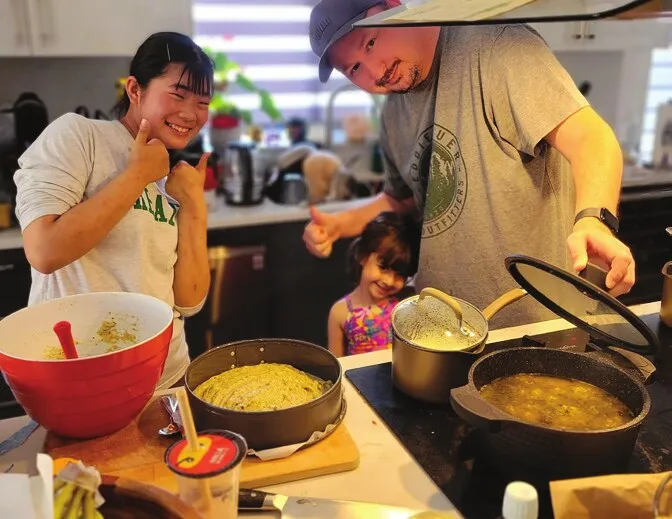
Food is a huge part of learning a new culture. It can be fun to learn what Canadian families like to eat and to teach your family what you like to eat. You could make the family a meal that is a favourite from your home country.
It is common for some flavours to be unfamiliar, and we ask that you give everything a try at least once. If you do not like a certain food, make sure your host family is aware. Food can be one of the hardest things to adjust to in a new country. Please remember to respectfully communicate your food likes and dislikes.
Your host family will show you what food items you can help yourself to, and what items should be saved for a later purpose. Make sure to ask questions and to follow all safety measures before operating appliances in the kitchen. While students can freely access and use the microwave and toaster, minors are not permitted to use the stove or oven unsupervised.
Tell your host what you like to eat and join them in the grocery shopping so you can see what Canadian stores have to offer.
While your host family will be providing your meals, this does not mean that your meals will always be served to you. It is common for students to prepare their own breakfast and lunch, for instance. Please ask your host where food is stored and how to make a simple breakfast, lunch, and dinner.
Breakfast
Breakfast is quick and light on weekdays. Families sometimes prepare breakfast together on the weekends. Some families eat a hot breakfast, while others prefer something cold.
Breakfast can include cereal and milk, toasts/bagels, eggs, or yogurt/fruit/granola.
Lunch
Eaten midday, lunch usually consists of a light main course, drink, and light dessert. Since lunch is usually eaten at school, you will take yours with you.
Lunch can include leftovers from previous meals, a sandwich, raw vegetables and dip, cookies, or fruit.
Dinner
Dinner is usually the largest and most important meal of the day enjoyed between 5 p.m. and 7 p.m., depending on the family routine.
It is important to let your host family know when you will be home for dinner. If you are late, they can leave a portion for you in the fridge.
Dinner time is a great opportunity for you to talk about your day with the host family and to bond with your host parents and siblings.
Dinner can include protein (chicken, beef, pork, fish, tofu, legumes, etc.), vegetables, and starch (potatoes, rice, or pasta).
Chores and Housework
Your host family will welcome you into their home as a member of their family. This means you will be asked to complete your share of the housework.
Common Chores
Bedroom
Keep your room clean by making your bed, putting your clothes away, and picking items off the floor each day. Depending on the type of flooring, vacuum, sweep, and/or mop at least once per week and take the garbage out regularly.
Bathroom
Leave the bathroom clean and dry after each use. In Canada, our home construction can be different from what you are used to, and water can be very damaging.
Mealtimes
Help with meal preparation, setting and clearing the table, washing dishes, etc.
Laundry
Ask your host to confirm their laundry routine and who is responsible for doing laundry, as it is different in each family. If you are responsible for your own laundry, ask your host to show you how to use the machines, including how much detergent and clothing can be added per load.
Other
Remember to always keep the home tidy and to pick-up after yourself as you move through the home. You may be asked to assist in other tasks, including taking out the garbage or helping to clear snow during the winter months.
Telephone & Video Calls
Having a Canadian cell phone number (or an international data plan) is an important safety requirement. Please share your Canadian number with your host family members and your RM as soon as possible, and always keep your personal cell phone charged. Please reach out to your RM if you need help in setting up a local phone plan – we have a partnership with a company called Phone Box and we would be happy to share their details with you.
Your host will have expectations around the length and timing of your phone calls. Please respect the family routine and do not disturb the sleep schedule of the home.
In case of emergency, call 9-1-1. You will be connected to an operator who will be able to send medical, police, or fire services right away. Always keep your home address readily accessible as you will need to provide this information to the operator.
Transportation In Your Community
The first few days after your arrival should be used to familiarize yourself with your community.
Ask your host to help with directions and planning public transportation options (student pricing is often available). Do a practice trip to and from your school and ask your host about other local attractions or meeting places in the area.
Your host family may be able to provide you with transportation during your stay, however, this is not an expectation. Therefore, do not expect to be offered daily rides.
If you would like support from your host with transportation, you must give the family as much notice as possible.
Mental Health Support
We are here to help if you are feeling homesick, anxious, overwhelmed, or need to talk with someone.
Your RM and our Care & Support Team are available to help navigate all aspects of your journey in Canada, including homestay, school, travel, and life in general. We are also a resource in case you experience personal challenges. Our team can be reached at help@canadahomestaynetwork.ca.
In addition, you can call 24/7/365 to speak with a credentialed counsellor about anything that is having an adverse effect on your mental health. Calls are completely confidential, and conversations can be held in English or in your preferred language.
Please call the Stay Healthy at School 24/7 Helpline at 1-833-646-1524. This service is available to all CHN students and all CHN students are automatically enrolled in the program.
In case of a mental-health crisis, call 9-1-1 right away.
CHN Expectations
To maintain your participation status with CHN you must follow rules that are designed to keep you safe and in line with CHN’s values and the promises we made to you and your host family.
The following are excerpts from our Student Participation Agreement (SPA), which you must read and sign. The SPA clarifies what is expected of participants like you and identifies what happens if expectations are not met.
If you have any questions or do not have a copy of our SPA, please contact your Relationship Manager (RM).
Host/Student Direct Payments
No money is to be exchanged directly between students and hosts. If unsure about a specific situation, contact your RM.
Obeying Laws
You must obey all laws of Canada while you are here, including laws specific to the operation of motor vehicles, downloading illegal content, and age-restricted laws regarding consumption of alcohol, tobacco, and cannabis.
Social Media
Refrain from posting on the Internet and social media platforms photos, audio and video recordings, and comments without prior consent from all parties involved (i.e., school, host family, etc.).
Meet With Your RM When Requested
Regular check-ins with your RM are very important. Be sure to attend all meetings with your RM and respond when they reach out to you.
CHN Expectations Specific to Minor Students
Curfews
Minor students and students in high school programs should be home by 6:00 p.m. on school nights, except when engaging in extra-curricular activities through school.
On non-school nights, curfew is as follows:
Ages 11-13: 10:00 p.m.
Ages 14-16: 11:00 p.m.
Ages 17-18: 12:00 a.m.
Be sure to notify your host immediately if you will be late for curfew so they do not worry about you.
Driving
Minor students and students in high school cannot drive a motor vehicle, motorcycle, motor scooter, or any other motorized form of transportation (including watercraft) and may not procure a Canadian driver’s licence while in the CHN program.
Travel While in Homestay
Travels (including day trips) outside of a minor student’s community require an adult who is at least 25 years old to accompany the student. For travels outside of the community without the host or for an overnight outside of the homestay home, the minor student must complete an Activity Authorization Form (AAF) to get their trip approved by CHN.
Your RM will give you a digital copy of the AAF to complete once you have reached out to let them know of your plans. We ask for the AAF to be completed and submitted at least two weeks prior to the scheduled trip so that we can review and consider the request, and discuss with everyone involved.
Students are responsible for completing the document and collecting signatures from the host and natural parents. The student’s agent, host, and/or RM can provide support, if needed.
Communication & Understanding
You have come to Canada to become more confident and assertive in English, so you’ll need to be brave!
Mistakes happen. The best way to improve your English is to practice. You can ask people to speak slower or to repeat themselves to help you better understand.
Use English while participating in events with your host family (i.e., looking at family photo albums, playing games, planning an outing, etc.)
Also, use English in as many simple daily activities as possible:
Preparing and eating meals
Shopping
Exercising
Watching TV
Try to give full answers to questions. For example, instead of simple “yes” or “no” answers, provide reasons, examples, or opinions.
Ask your host to explain idiomatic expressions (phrases that present a figurative, non-literal meaning) as these can be hard to understand at first. For example, “hang on” means “one moment please” or “please wait.”
When asked if you understand, be honest. Do not say that you understand for the sake of harmony, instead ask for help. Ask if your host understands you as well. This can take effort, but it will always be worth it.
Speak slower if you are having trouble making yourself understood or rephrase using different words.
Communication with CHN
Make sure to respond to CHN communications (phone calls, emails, and texts) in a timely manner. When applicable, please complete forms in full and submit them on time. It’s crucial that you respond to surveys received from CHN as your responses help us with supporting you in our program and with improving our homestay program for future students. If you have questions, reach out to your RM before the due dates.
Be kind, ask questions, and share your stories and experiences with your hosts and us, too!
Overcoming Challenges
We hope that your homestay experience will be deeply rewarding and enjoyable. There may be moments when you encounter difficulties. These are often the result of poor communication, miscommunication, or a mutual inability to compromise.
If you experience problems or feel unhappy
Speak with your host family immediately. Often issues are not as big as they seem. Your host family wants you to enjoy your time in Canada and may not be aware there is an issue. Talking about the situation and looking at what can be done to resolve the problem is the first step.
If you have tried speaking with your family, and do not feel the problem has been resolved, please contact us for help.
Persistent Problems
If problems seem to come up again and again between you and your host, please let us know.
In many cases, we start with a mediation conversation between you and your host and give ideas or advice on possible resolutions or next steps.
The idea is to ensure that everyone understands the issue, including your agents and/or natural parents as required, and that everyone’s perspective has been shared.
Relocation Options
Relocation is a last resort as it can be quite disruptive to your homestay experience. Often if students and hosts put in the effort and try to compromise, the issue can be resolved.
You know the expression, “The grass isn’t always greener on the other side”? It is the same thing with relocations.
That said, relocations are at times required. For instance, a student can be relocated if they are disrespectful toward their host family or refuse to abide by the family’s rules. CHN can also relocate a student if their host family is not abiding by the guidelines and rules of our program or if their host family has an emergency and is no longer able to host them.
Progressive Discipline Model
You are responsible for being aware of the guidelines noted in your SPA and your host family’s household rules. Failure to follow the rules of the program could result in disciplinary action up to and including termination from the program with no refund.
CHN’s Progressive Discipline Model was established to encourage learning and growth and an understanding that there are consequences for unproductive and negative behaviour. Our approach to conflict is to look for the best in everyone and recognize opportunities for growth, compromise, and understanding.
Outlined below is the standard Progressive Discipline Model that is followed by CHN to help students correct negative behaviours.
1.
Verbal Warning
A CHN member will speak to the student about what they did, why it was wrong, and how they should behave in the future. The student’s agent and natural parents will be informed of this warning.
2.
Written Success Plan
Students who have failed to meet the behavioural expectations of the SPA will be provided with a written success plan. These plans are meant to provide students with easy-to-understand behavioural guidelines to help them be successful in homestay. Students are asked to sign to confirm their understanding of the success plan.
3.
Homestay Probation Notice
The student is put on formal probation. They are given clear written guidelines for behaviour, potentially a deadline for remedying their behaviour, and advanced notice of the consequences of failing to remedy their behaviour, including dismissal from the program.
4.
Termination Warning
Similar to probation, a termination warning is time-limited and provides an explanation of the breach of the SPA, as well as required steps for improvement. The termination warning is one last opportunity for CHN to provide warning and counsel to a student to avoid dismissal from the program. The student is informed that this is their final warning.
5.
Termination Notice (Dismissal)
If a student’s behaviour has led them to be given a termination warning and they continue to breach the SPA and the terms of their termination warning, it will result in immediate removal from the homestay program. Custodianship services will be cancelled, and the student will have to return to the care of their natural parents, or an alternative custodian as legally authorized through a document notarized in Canada or in the home country of the student.
NOTE: If a student’s breach of the SPA is serious enough, the consequences may immediately go to a higher level on the model, or immediately to dismissal. For example, if a student displays an act of physical aggression or issues a threat of violence, written documentation will occur, and immediate dismissal may result.
Canada’s Healthcare System
All students must have personal medical coverage that can be purchased independently, through CHN or through their school program.
Payment for medical services not covered by the insurance company is the responsibility of the student.
Some hospitals and clinics offer direct billing, while others require payment upfront. In the case where payment is required upfront, the student must submit a claim through the insurance provider.
Be aware of your insurance information on your arrival and ensure it is kept in a safe place. You can share this information with your host family in case of an emergency.
In the event of a medical emergency in Canada, please call 9-1-1. This is a toll-free call to a centralized, national switchboard that will send medical, police, or fire services to you right away.
You can also call CHN’s 24/7/365 emergency line at 1-877-441-4443 and press 1. We will assist you and ensure your host family and contacts in your home country are notified if necessary. If in-person support is needed, your local RM will assist.
Welcome to Canada!
We hope that this guide has helped you better understand what the CHN homestay program is and what you can expect when you arrive in Canada and during your stay with us. Remember, come with an open mind, and look forward to trying something new. We are excited to have you.